Stinging Insects
Get an Estimate!
Services
Stinging Insect Control in Lansing and Surrounding Areas


Gutter installers found a hornet nest in my home and couldn’t finish the installation. I called a number of large chain pest control companies but Ben explained his process over in detail that I could understand. He and his assistant came that same day. They were thorough and the price was reasonable. I highly recommend Stewart Pest Solutions.
Stinging insects can quickly turn your home or business into an uncomfortable and potentially dangerous environment. While many of these insects play an important role in nature, they can become aggressive when nesting near people, especially in high-traffic areas.
Common stinging insects in Michigan include wasps, hornets, yellowjackets, carpenter bees, and honey bees. Some species, like yellowjackets, can form large colonies with thousands of members, increasing the risk of repeated stings if disturbed.
Common Stinging Insects in Michigan
Yellowjackets
Yellowjackets are ½ inch black-and-yellow wasps with teardrop-shaped faces. Highly aggressive and territorial, yellowjackets often build nests in the ground or inside wall voids. They are known for stinging multiple times and are commonly attracted to food and outdoor gatherings. Be careful, colonies of this insect can grow to 5,000 members by the fall season.
Wasps
Wasps, including paper wasps, are ½-1 inch yello-and-black insects with slim waists. They build visible nests under eaves, decks, and other structures. They are protective of their nests during the late summer months, and can sting repeatedly when threatened. In contrast, they act as natural pest controllers as well.
Hornets
Hornets are larger stinging insects, around ¾-1 inches, that build aerial nests in trees or on structures. Aggressive colony defenders, they hunt insects to feed larvae. Their stings are potent and can be repeated. Hornets chew wood siding lightly, but primarily forage during daylying and rarely swarm homes unless provoked.
Honey Bees
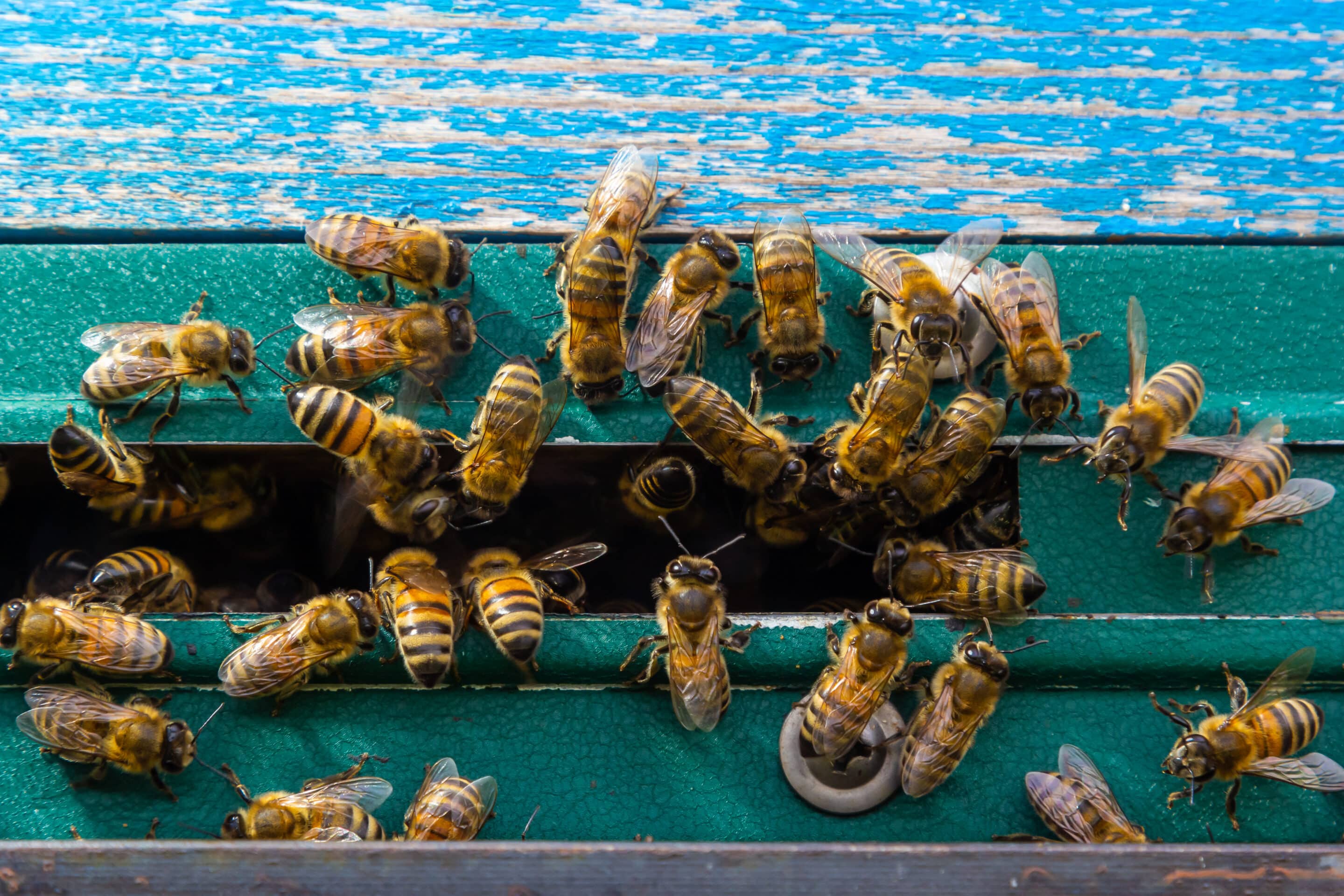
Honey bees are fuzzy, ¼-1 inch pollinators. Social hive-dwellers, they collect nectar and pollen for honey and larvae. They sting only when threatened, and a sting usually kills the bee itself. Essential for crops, bees buzz flowers during the day and swarm in spring, but they are rarely aggressive unless disturbed.
Carpenter Bees
Carpenter bees are 1-inch shiny black bumblebee mimics. Females drill half-inch tunnels in soft wood decks or eaves to create pollen-packed nurseries. Michigan wood-borers, they don’t eat wood, but only weaken structures over time. Males hover territorially but don’t sting.
Why Stinging Insects Are a Concern
Stinging insects pose more than just a nuisance. They can create real safety risks for people and pets.
- Stings can cause pain, swelling, and irritation
- Multiple stings may increase the risk of infection
- Allergic reactions can be severe or life-threatening
- Nests near entrances, roofs, or ventilation systems can interfere with normal use
- Large colonies increase the likelihood of repeated stings
Because of these risks, professional removal is the safest option.
Frequently Asked Questions (FAQ)
What’s the difference between wasps, hornets, and yellow jackets?
Yellow jackets are a type of wasp known for their aggression and ground nests. Hornets are larger wasps that typically build aerial nests. All are stinging insects and can pose serious threats when disturbed.
Will your treatment stop them from coming back?
Yes. We use preventative treatments and recommend sealing up vulnerable areas to help prevent future nesting.
Can you safely remove bees without killing them?
We don’t kill honey bees. If they need to be relocated, we partner with local beekeepers or can direct you to proper resources.
Stewart Pest Solutions Stinging Insect Treatments
At Stewart Pest Solutions, we tailor our treatment approach based on the type of insect and the location of the nest.
Our services may include:
- Targeted treatments using professional-grade sprays, dusts, or aerosols
- Safe removal of nests from structures, trees, or ground areas
- Treatment of carpenter bee entry points and nesting sites
- Preventative measures such as sealing openings and reducing attractants
When honey bees are present, we coordinate with local beekeepers whenever possible to ensure safe and responsible removal.
Protect Your Property from Stinging Insects
Do not risk painful or dangerous encounters with stinging insects. Stewart Pest Solutions provides fast, effective control services in Lansing and surrounding areas.
Call 517-525-4753 today to schedule your inspection or request service online and enjoy your outdoor space with confidence.