
Wasps can quickly become more than an outdoor nuisance. These territorial stinging insects build colonies that grow throughout the summer, making them increasingly dangerous around homes, patios, playgrounds, and gardens. In Michigan, wasp activity begins in late spring and peaks during August and September when colonies are at their largest. Attempting to remove a nest without the proper equipment or experience can trigger aggressive swarming, putting your family and pets at risk.
If you are wondering how to get rid of wasps, understanding their behavior is the first step toward safe and effective control.
Wasp Behavior in Michigan
Knowing when wasps are most active can help you catch problems before they become serious.
Spring (May to June)
Overwintered queens emerge and begin building small starter nests. Colonies are still small, making this the best time to spot and remove nests before they grow.
Summer (July)
Worker wasps rapidly expand the colony. Nests become much larger, and wasps spend more time searching for insects and food around your yard.
Late Summer and Early Fall (August to September)
This is when colonies reach peak size, often containing hundreds or even thousands of wasps. As food becomes scarce, wasps become more defensive and gather around trash bins, outdoor meals, pet food, and sugary drinks. Stinging incidents become more common during this time.
Common Types of Wasps Found in Michigan
Yellowjackets
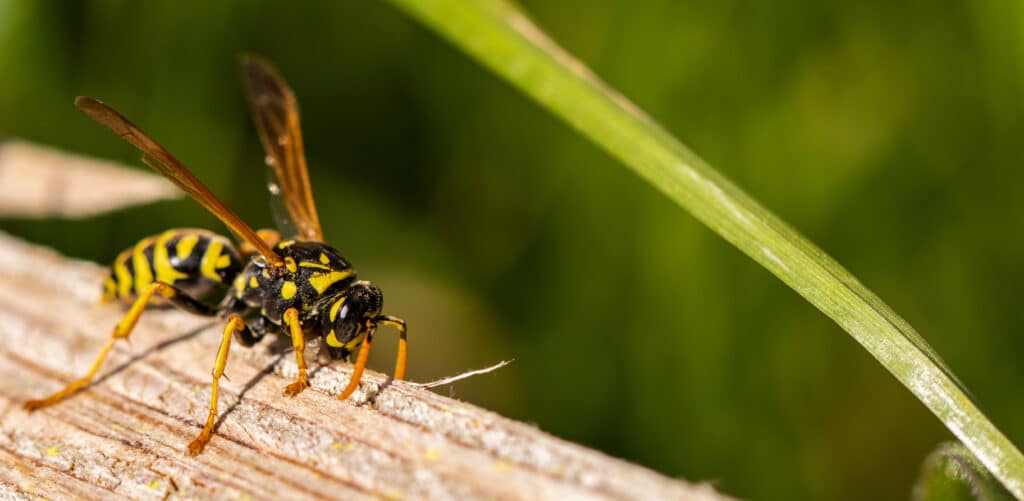
Yellowjackets (Vespula) are bright yellow and black wasps known for their aggressive behavior. They often build underground nests that can be hidden in lawns. Stepping near the entrance or mowing the grass can trigger a swarm.
Paper Wasps
Paper wasps (Polistes) build umbrella-shaped nests under roof eaves, decks, and porch ceilings. They are generally less aggressive unless their nest is disturbed.
Bald-Faced Hornets
Bald-faced hornets (Dolichovespula maculata) build large paper nests in trees and on buildings. They are highly protective of their colonies and should never be approached without caution.
How to Identify a Wasp Nest
Aerial nests are usually easy to spot. Look for papery nests under rooflines, hanging from tree branches, or attached to outdoor structures.
Underground nests are more difficult to find. Watch for:
- Small holes in the lawn with frequent wasp activity
- Increased wasp activity while mowing
- Wasps entering foundation cracks
- Pets getting stung unexpectedly
Because they are hidden, underground wasp nest removal is especially dangerous for homeowners.
How to Get Rid of Wasps Safely
If you choose to remove a small exposed nest yourself, always use caution.
Confirm the Nest Type
Identify whether the nest is aerial, underground, or inside a wall. Small visible nests are much safer to treat than hidden or large colonies.
Treat the Nest at Night
Wasps are less active after sunset. Never attempt removal during the middle of the day when the colony is most active.
Wear Protective Clothing
Wear thick long sleeves, gloves, eye protection, and closed-toe shoes. Even with protection, multiple stings are still possible.
Use the Right Wasp Spray
Use a long-range spray labeled specifically for wasps. Spray the entrance thoroughly from a safe distance, then wait at least 24 hours before removing the nest.
Do NOT attempt DIY removal if:
- The nest is underground.
- The nest is inside walls or siding.
- The nest is larger than a softball.
- Anyone nearby is allergic to stings.
- Children or pets could be exposed.
Why Underground Wasp Nests Are So Dangerous
Underground yellowjacket colonies may contain hundreds or thousands of wasps. Vibrations from mowing or walking nearby can trigger an immediate defensive response. Multiple stings can occur within seconds, and pets are often the first to encounter these hidden nests. In most cases, professional treatment is the safest solution.
When to Call a Professional Wasp Exterminator
Professional help is recommended if:
- Wasps are nesting in your lawn.
- The nest is inside a wall or foundation.
- You notice aggressive swarming.
- Someone has already been stung.
- A family member has a sting allergy.
- The nest is near decks, doors, or play areas.
Stewart Pest Solutions provides professional wasp removal and stinging insect control services to safely eliminate dangerous nests in Lansing and other surrounding areas.
How Professionals Remove Wasps
Professional wasp removal includes:
- Identifying the wasp species
- Selecting the correct treatment
- Safely treating underground nests
- Inspecting for additional colonies
- Providing prevention recommendations
Professional treatment greatly reduces the risk of stings and recurring infestations.
Preventing Future Wasp Problems
Reduce your chances of another infestation by:
- Inspecting your home during May and June
- Removing small starter nests when safe
- Keeping trash bins tightly sealed
- Cleaning up food and sugary spills
- Bringing pet food indoors
- Repairing siding and foundation cracks
- Installing vent screens where needed
- Sealing gaps around windows, doors, soffits, and other entry points
Frequently Asked Questions
When are wasps most active in Michigan?
Wasps are most active during August and September when colonies reach their largest size and become more aggressive.
Are underground wasp nests common in Michigan?
Yes. Yellowjackets frequently build underground nests in lawns and around foundations.
Is it safe to remove a wasp nest yourself?
Small exposed nests may be removed with caution, but underground, hidden, or large nests should be handled by a professional.
Why are wasps more aggressive in late summer?
Food becomes scarce while colonies are at peak population, making wasps much more defensive and likely to sting.
Protect Your Home From Dangerous Wasps
A small wasp nest can quickly grow into a serious safety hazard, especially during Michigan's late summer months. If you've noticed increased wasp activity or discovered a nest on your property, don't wait until someone gets stung.
Stewart Pest Solutions provides safe, professional wasp removal, underground wasp nest removal, and stinging insect control for homeowners throughout Lansing and surrounding Michigan communities. Our experienced team can identify the species, treat the nest safely, and help prevent future infestations.
Contact Stewart Pest Solutions today to schedule an inspection and enjoy your yard with confidence.