
A garden can look very different after one overnight visit from deer. Flower buds disappear, vegetable leaves are torn away, and a young tree may have fresh scrapes down its trunk. For Michigan homeowners, these losses can continue even after the growing season ends.
Deer move comfortably between wooded cover and nearby yards. Tender spring plants attract browsing, while limited winter food can bring more attention to shrubs and trees. Protecting your landscaping does not have to involve harming the animals.
If you’re wondering how to keep deer out of your garden, start with physical barriers, then consider repellents and changes to your landscaping. The best approach depends on the type of damage you’re seeing and the time of year.
Why Deer Are Attracted to Your Garden
Deer take advantage of accessible food. Hostas, tulips, roses, vegetable crops, and fruit trees can offer an appealing meal. Newly planted shrubs may also be within easy reach along an established route through the neighborhood.
Around Lansing and surrounding areas, yards beside woods or fields can sit directly between shelter and feeding areas. Once deer discover a dependable source, they may revisit it regularly.
Look for tracks, droppings, and ragged browsing on plants. Rabbits and other animals can cause garden damage too, so identifying the visitor helps you choose suitable protection.
When Deer Damage Is the Worst in Michigan
Spring (April Through June)
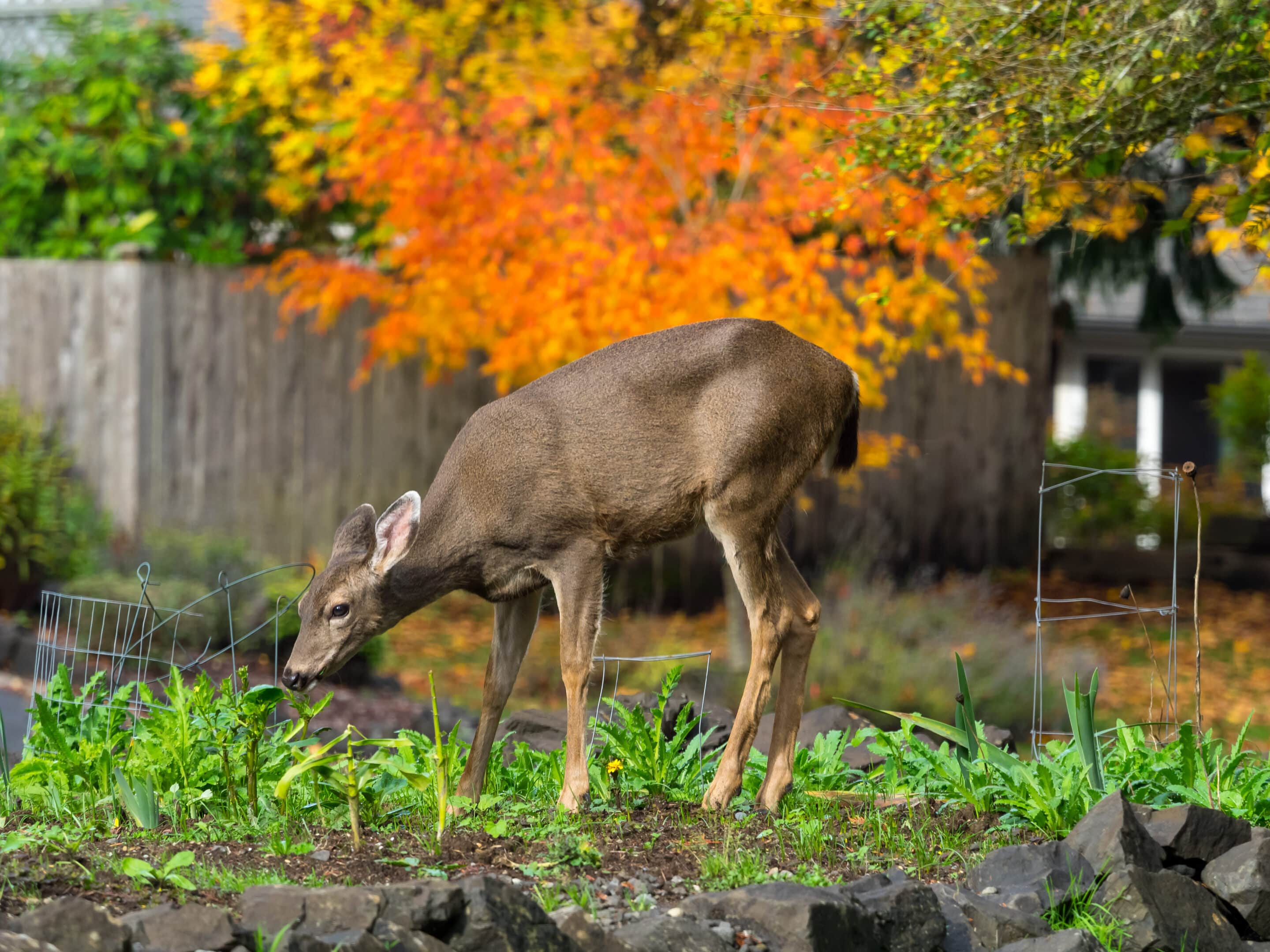
Fresh shoots and emerging leaves provide food after winter. Browsing at this stage can remove an entire season's flower buds or damage a small transplant before it becomes established. Put protection around vulnerable beds before new growth becomes accessible.
Late Summer
Ripening produce and fruit can draw deer toward vegetable plots and orchards. Check barriers as plants grow taller or extend beyond the fence. A protected stem does little good if leaves or fruit are reachable outside it.
Fall and Winter
Michigan winters create additional challenges for homeowners trying to protect their landscaping. As temperatures drop and snow covers the ground, natural food sources become harder for deer to reach.
Deer may turn to evergreen shrubs, tree buds, twigs, and other woody growth. When snow accumulates, it can also give deer additional height, allowing them to reach branches they might not normally be able to access.
Young trees are particularly vulnerable during this time. Protecting their trunks and exposed branches before winter arrives can help prevent damage that may not become obvious until spring.
How to Keep Deer Out of Your Garden With Humane Methods
1. Install Physical Barriers
For a larger garden, a sturdy fence at least 8 feet tall generally provides the most reliable exclusion. Deer can clear many ordinary yard fences, making height an important part of the design.
The enclosure also needs secure gates and a well-maintained lower edge. A gap beneath the fence or a gate left open can defeat an otherwise effective barrier. Keep fencing visible and properly tensioned rather than leaving loose material that could entangle wildlife.
For individual trees, guards or freestanding wire cages may be more practical than enclosing the yard. A trunk guard protects bark; a sufficiently tall and wide cage can also keep deer from reaching branches. Choose protection according to the tree's size and the damage you want to prevent.
Stewart Pest Solutions offers seasonal tree wrapping through its deer protection services. Ask which trees would benefit and whether additional protection is needed for exposed foliage.
2. Use Deer Repellents
Repellents make treated vegetation less appealing through taste or smell. They may discourage feeding, but they do not create a physical boundary.
Follow the label for application timing and reapplication. Rain, irrigation, and fresh plant growth can affect coverage. Michigan’s changing weather conditions may also mean you need to check treated plants more frequently.
Choose products labeled for the specific plants and use. A repellent suitable for ornamental shrubs is not automatically appropriate for vegetables or edible fruit. For valuable plantings, use repellents alongside barriers rather than depending on a single spray.
3. Modify Landscaping to Reduce Attraction
Consider less-preferred plants when replacing repeatedly browsed flowers or shrubs. Michigan-adapted options with strong scents, coarse leaves, or other unappealing traits may receive less attention, although no plant is completely deer-proof.
Collect fallen fruit and keep outdoor feed inaccessible. Selectively reducing dense brush near frequently damaged beds may reduce nearby cover, but clearing a property will not stop deer from crossing it.
Place favorite plants inside a protected area instead of continually replanting an exposed border.
4. Try Motion-Activated Deterrents
A sprinkler triggered by movement may interrupt a visit. Motion lights or changing sounds can also startle deer initially, although repeated exposure may make these devices easier to ignore.
Treat them as supporting measures and monitor whether browsing actually decreases. Position devices with neighbors and pets in mind. Drain seasonal sprinklers before freezing weather, when water could create slippery surfaces or damage equipment.
Why DIY Deer Prevention Sometimes Fails
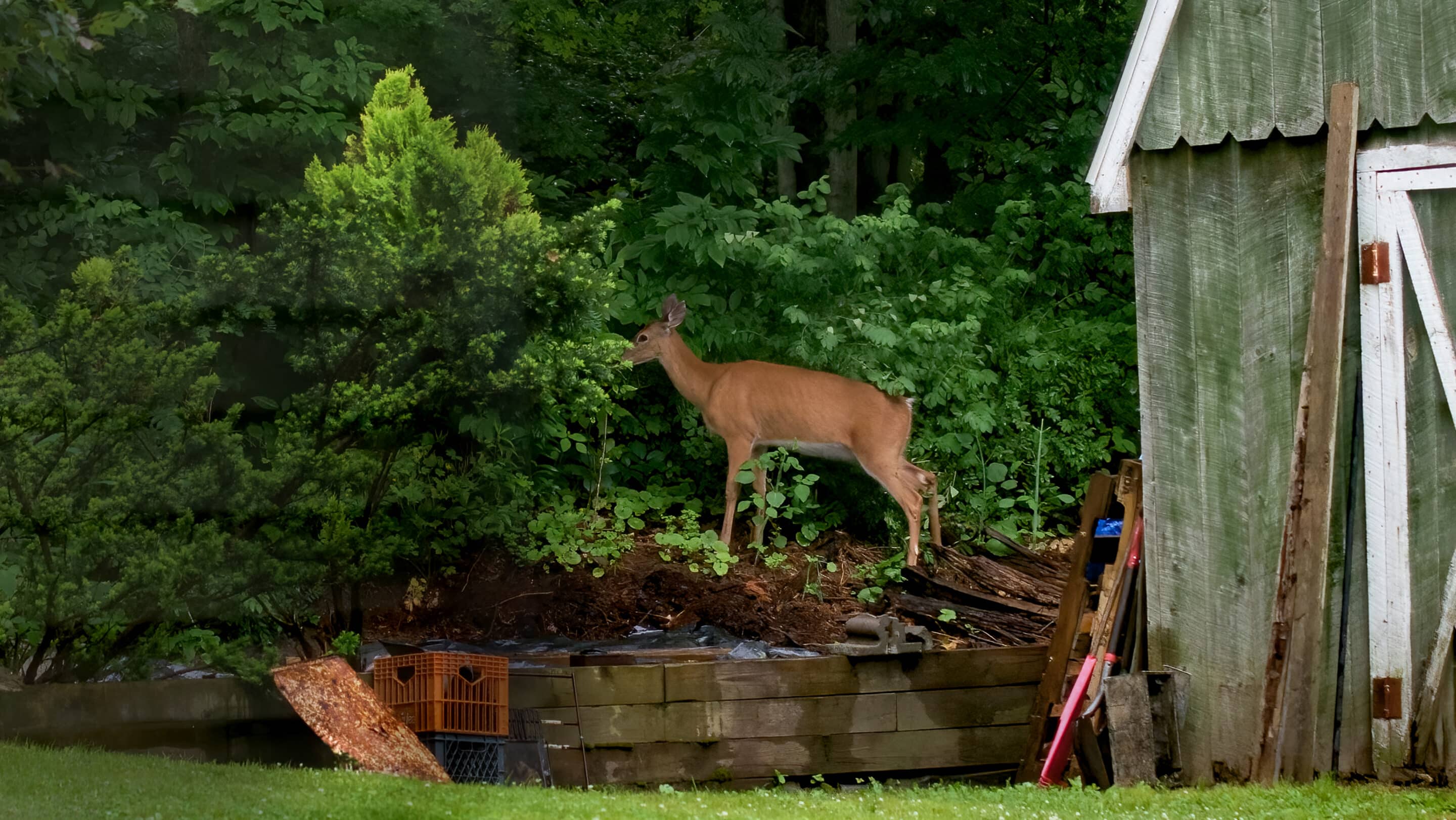
A method may work on one property and disappoint on another. Local deer numbers, available food, and the layout of your yard all influence results.
Common problems include:
- An incomplete barrier: Deer can enter through a low section, damaged panel, or unsecured gate.
- Missed repellent applications: New growth or weather may leave plants without adequate coverage.
- Unprotected trunks: Garden fencing does not help a young tree standing outside it.
- Heavy browsing pressure: Food shortages can make deer more persistent.
Before buying another product, review where the damage continues. A different approach may be needed for a rubbed tree than for a vegetable bed losing leaves.
Protecting Trees From Deer Damage During Michigan Winters
Young trees have limited bark and smaller trunks, making extensive injury especially serious. Antler rubbing can expose underlying tissues. If damage extends around the trunk, it can interrupt the movement of nutrients and eventually kill the tree.
Missing bark does not always mean deer were responsible. Rabbits and voles can also injure trees, particularly near the ground or beneath snow. Identifying the cause matters when selecting a guard.
If you plan to wrap trees for deer damage prevention, use material intended for tree protection and allow room for growth. A suitable wrap or guard can reduce direct trunk injury, but it will not stop deer from eating uncovered twigs and buds.
Install protection before local rubbing activity begins, then check it again ahead of winter. Inspect guards periodically for shifting, tightness, or damage. Remove seasonal wraps in spring as appropriate for the material, and adjust any remaining guards as trunks expand. Cages may still be needed where browsing continues year-round.
When to Seek Professional Deer Prevention Help
Repeated plant replacement, unsuccessful repellent use, or fresh bark damage are reasons to review your plan with a professional. Photographs of damaged plants and notes about where deer enter can make the discussion more useful.
Stewart Pest Solutions provides deer deterrent treatments and seasonal tree protection for homeowners in Lansing, Byron Center, and surrounding communities. Our recommendations consider vulnerable plantings, property layout, and recurring activity.
For deer prevention in Lansing, MI, contact our team to discuss your yard. You can also explore our other pest control services if several animals or insects may be contributing to the problem.
Humane Deer Control and What Homeowners Should Know
For residential landscaping, humane control centers on keeping deer away from vulnerable plants and making visits less rewarding. Fencing, suitable tree protection, and maintained deterrents let you address damage without attempting to handle the animals.
Do not try to catch deer or encourage dogs to chase them. Avoid putting out food elsewhere in the yard to distract them, since that can encourage continued visits.
Learn more about Stewart Pest Solutions and our approach to practical recommendations and respectful service. We can explain available prevention options without pressuring you into unnecessary treatments.
How to Protect Your Garden Before Damage Starts
Make prevention part of your seasonal yard routine. Check garden fencing in early spring before shoots emerge. Start any repellent program according to its label, before browsing becomes established.
Review young-tree protection before late-summer and fall rubbing, then prepare for winter feeding before snow arrives. Walk the property after storms to check for fallen branches or displaced barriers.
Keeping a few photographs helps you compare damage between seasons and see whether your current protection is working.
Frequently Asked Questions
What Is the Most Effective Way to Keep Deer Out of a Garden?
A properly maintained fence at least 8 feet high is generally the most reliable option for larger gardens. Gates and ground-level gaps need attention too.
Do Deer Repellents Really Work?
They can reduce browsing, particularly with consistent use before damage becomes routine. Weather, new growth, and food scarcity affect results. Follow the label and add barriers where needed.
When Should I Wrap My Trees to Prevent Deer Damage?
Have protection in place before rubbing begins locally, which may be in late summer or early fall. Check it before winter and review seasonal wrap removal in spring.
Can Deer Kill Young Trees?
Yes. Extensive bark injury around the trunk can be fatal, and repeated browsing can weaken growth. Protect vulnerable trees before damage accumulates.
Do Deer Eat Plants During Michigan Winters?
Yes. When snow covers the ground and natural food sources become harder to find, deer may browse on evergreen foliage, buds, twigs, and young trees. Tree guards and other physical barriers can help protect vulnerable landscaping.
Get Help Protecting Your Michigan Garden
Knowing how to stop deer from eating plants starts with choosing protection you can maintain. Addressing access, feeding, and trunk damage together gives your landscaping a better chance through changing seasons.
Call Stewart Pest Solutions at 517-525-4753 or request a consultation to discuss humane deer prevention and seasonal tree protection for your property.